
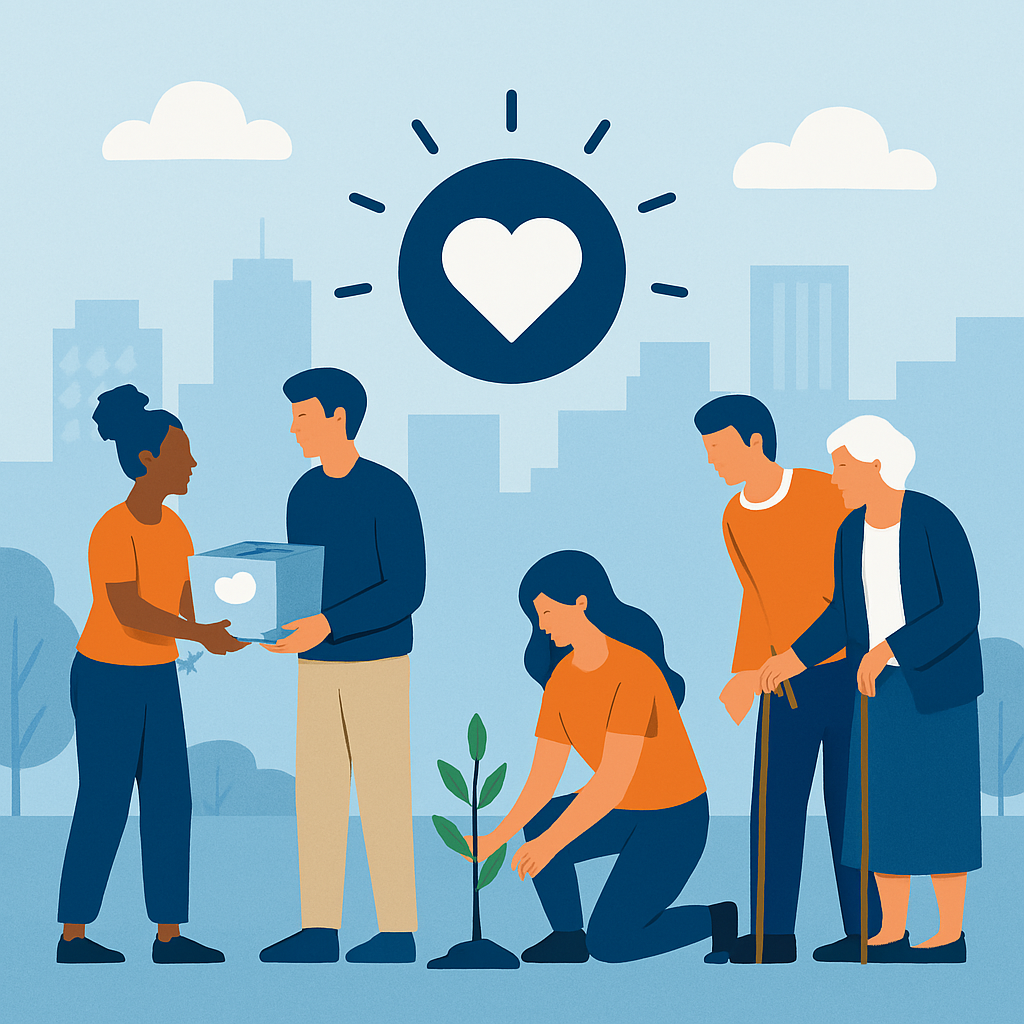
In our modern, fast-paced society, the concept of community often gets overshadowed by individual pursuits. We live in an era that frequently celebrates personal milestones, career advancements, and individual financial independence. While personal growth and self-reliance are important pillars of a fulfilling life, they do not tell the whole story of human well-being. True prosperity is deeply intertwined with the health and vitality of the collective environment around us. When we shift our perspective to view community impact not as an optional charitable hobby for a select few, but as a shared goal for everyone, we unlock a powerful catalyst for sustainable, meaningful change George Freundlich.
The Interconnected Nature of Modern Life
To understand why community impact must be a universal responsibility, we must first recognize the fundamental interconnectedness of human existence. No individual lives in an absolute vacuum. The air we breathe, the infrastructure we use, the economic systems that provide our livelihoods, and the cultural spaces that enrich our minds are all collective products of community cooperation.
When a neighborhood flourishes, crime rates drop, educational resources improve, local businesses thrive, and mental health outcomes rise. Conversely, when a community suffers from neglect, economic stagnation, or social fragmentation, the ripples of that distress eventually reach everyone, regardless of their personal wealth or gated isolation. Social isolation and community decay breed systemic challenges that affect public safety, economic stability, and overall quality of life. Therefore, contributing to community impact is not merely an act of altruism; it is an enlightened form of self-interest. By uplifting those around us, we build a safer, more resilient, and more prosperous environment for ourselves and our families.
Moving Beyond the Myth of the Lone Hero
For generations, society has often outsourced community welfare to governments, non-profit organizations, or wealthy philanthropists. We have fallen into the trap of believing that creating positive change requires massive institutional funding, a heroic public figure, or a lifetime of dedicated activism. This misconception creates a psychological barrier that prevents everyday citizens from taking action. People often think, “I am just one person with a busy schedule and limited resources; what difference can I possibly make?”
The reality is that profound community impact is rarely built by a single grand gesture. Instead, it is woven together by thousands of micro-actions performed by ordinary people. Whether it is mentoring a local youth, organizing a neighborhood cleanup, supporting a small local business, or simply checking in on an elderly neighbor, every individual possesses unique skills, time, and empathy to offer. When community impact is treated as a shared goal, the burden of responsibility is distributed. Instead of expecting a few overwhelmed organizations to solve systemic issues, entire communities mobilize their collective intelligence and compassion.
The Psychological and Social Benefits of Shared Responsibility
Embracing community impact as a shared goal does not just benefit recipients; it profoundly transforms the individuals who participate. Modern society faces a silent epidemic of loneliness and disconnection. Despite being more digitally connected than ever before, people report feeling increasingly isolated and lacking a sense of purpose.
Engaging in community work provides an antidote to this alienation. When individuals work together toward a common good, they forge deep, authentic social bonds. Shared struggles and shared triumphs build social capital and trust among neighbors who might otherwise remain strangers. Psychologically, contributing to the welfare of others activates reward centers in the brain, fostering a sense of purpose, self-worth, and belonging. People who actively engage in their communities report lower levels of depression, higher life satisfaction, and a stronger sense of personal agency.
Cultivating a Culture of Collective Accountability
Transforming community impact into a shared goal requires a cultural shift in how we educate our youth, structure our workplaces, and evaluate success.
Education systems play a vital role in this transformation. By integrating community service learning into school curriculums, we teach children from an early age that they are part of a larger social fabric. When students participate in local projects, they learn empathy, civic responsibility, and collaborative problem-solving skills that textbooks alone cannot teach. They realize that their actions have tangible consequences for the world around them.
Workplaces and corporations also have a pivotal part to play. Corporate social responsibility should extend beyond superficial marketing campaigns or annual token donations. Modern organizations can empower their employees by providing paid volunteer time, supporting grassroots initiatives, and aligning business models with sustainable community outcomes. When employees see their workplace actively investing in the local community, morale increases, and a shared sense of corporate citizenship takes root.
Overcoming Apathy and Division
Of course, embracing a shared goal of community impact is not without its hurdles. In an era marked by political polarization, social fragmentation, and economic inequality, communities can often feel divided. It is easy to retreat into echo chambers and focus exclusively on protecting one’s immediate circle.
Overcoming these divisions requires intentional dialogue and radical inclusivity. A truly impactful community is one that leaves no one behind. It requires listening to marginalized voices, addressing systemic inequities, and ensuring that community development benefits all residents equitably. When we approach community impact through the lens of collaboration rather than competition, we discover that our shared human needs—safety, health, dignity, and connection—far outweigh our superficial differences.
Conclusion: The Future We Build Together
Ultimately, why community impact should be a shared goal for everyone comes down to a simple truth: the future is not something that simply happens to us; it is something we actively construct through our daily choices. If we desire a world characterized by resilience, compassion, and opportunity, we cannot wait for someone else to build it.
Every individual has a sphere of influence, no matter how small it may seem. By recognizing our shared stake in the health of our communities, we step out of passive isolation and into active stewardship. When everyone contributes a fraction of their energy, time, and care, the cumulative effect is transformative. Community impact ceases to be a heavy obligation and becomes a joyful expression of our shared humanity, proving that we truly are stronger, safer, and better when we rise together.