
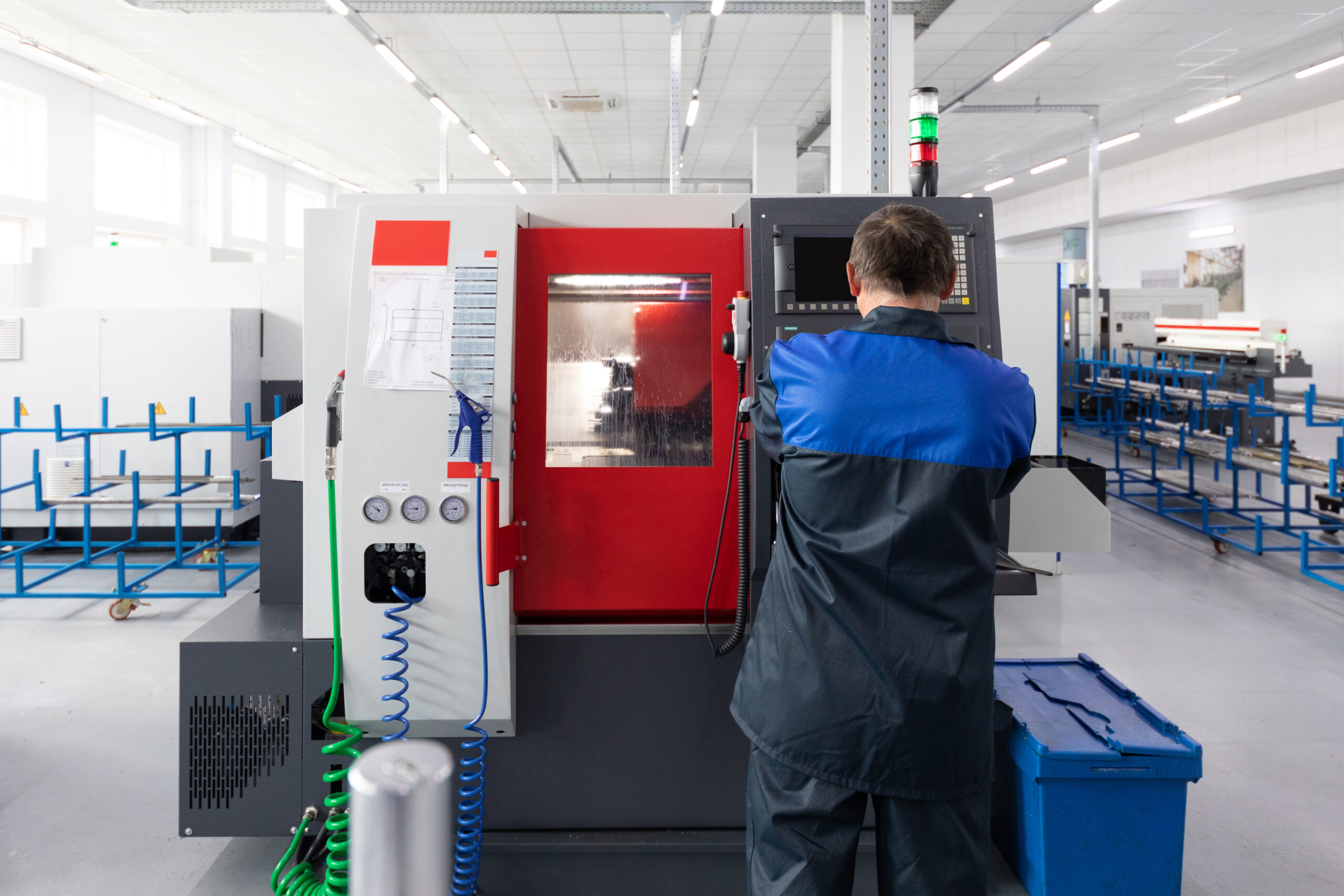
CNC precision machining has revolutionized the manufacturing world, enabling unparalleled accuracy, efficiency, and flexibility in producing complex parts. To truly appreciate its impact, it is essential to explore the historical evolution of machining from manual techniques to modern computer-controlled processes.
Early Beginnings of Machining
The origins of machining date back several centuries, when artisans and engineers relied on hand tools and simple mechanical devices to shape metal and other materials. Early machines, such as lathes and milling machines, were entirely manual. Skilled operators controlled these machines using handwheels and levers, carefully guiding cutting tools to achieve the desired shape. Accuracy depended heavily on the operator’s skill, patience, and experience.
During the 18th and 19th centuries, the Industrial Revolution brought significant advancements in machinery. Machines became more standardized and powerful, allowing manufacturers to produce parts with higher precision than ever before. However, the process remained labor-intensive, and achieving consistent results required constant human intervention.
The Rise of Numerical Control
The concept of automating machining processes began to take shape in the mid-20th century. In the 1940s and 1950s, engineers sought ways to reduce human error and increase productivity in manufacturing. This led to the development of numerical control (NC) machines, which used punched tape or cards to control machine tools.
With numerical control, instructions for machining operations could be pre-programmed, allowing machines to perform repetitive tasks more consistently than human operators. While these early NC machines were revolutionary, they were limited by their reliance on mechanical and electromechanical components, and programming them required specialized knowledge.
The Advent of CNC Precision Machining
The introduction of computers in the 1960s and 1970s marked a turning point in the evolution of machining. Computer numerical control (CNC) brought the power of digital technology to manufacturing, transforming the industry. CNC precision machining allowed engineers to program machines using software, enabling far greater flexibility and precision than traditional NC systems.
With CNC, a single machine could perform multiple operations without manual adjustments. This included milling, turning, drilling, and cutting complex shapes with minimal human intervention. The digital nature of CNC systems also made it easier to store and reproduce designs, streamlining production for both small and large-scale manufacturing.
Key Milestones in CNC Technology
Several technological milestones shaped the development of CNC precision machining:
- 1960s: The first true CNC machines were developed, using early computer systems to control machine movements. These machines were primarily used in aerospace and automotive industries.
- 1970s: Advances in microprocessors made CNC machines more affordable and compact, expanding their adoption across various manufacturing sectors.
- 1980s: Introduction of CAD/CAM (computer-aided design and computer-aided manufacturing) software allowed engineers to design parts digitally and directly transfer instructions to CNC machines.
- 1990s–2000s: The integration of robotics, high-speed spindles, and multi-axis capabilities enabled CNC machines to produce highly complex components with unprecedented accuracy.
- 2010s–Present: The rise of Industry 4.0 and smart manufacturing introduced IoT connectivity, real-time monitoring, and adaptive control systems, further enhancing CNC precision machining efficiency.
Advantages of CNC Precision Machining
CNC precision machining offers numerous benefits over traditional manual methods:
- Accuracy and Consistency: CNC machines can achieve tolerances measured in microns, ensuring every part meets exact specifications.
- Efficiency: Automated processes reduce production time and minimize errors, leading to faster turnaround.
- Flexibility: CNC machines can be reprogrammed quickly to produce different parts, supporting both prototyping and large-scale production.
- Complexity: Multi-axis CNC machines can create intricate geometries that would be impossible or highly labor-intensive with manual machining.
- Cost-effectiveness: While initial investment in CNC equipment can be high, long-term savings in labor, material waste, and production time often outweigh the costs.
Impact on Industries
CNC precision machining has had a transformative effect across a wide range of industries. In aerospace, it enables the production of lightweight, high-strength components with extreme precision. In automotive manufacturing, CNC ensures consistent quality and allows rapid prototyping of new designs. Electronics, medical devices, and energy sectors also rely on CNC precision machining for intricate and high-performance parts.
Moreover, the integration of CNC with additive manufacturing (3D printing) has opened new possibilities for hybrid production techniques, combining subtractive and additive methods for complex, efficient, and cost-effective manufacturing.
The Future of CNC Precision Machining
The future of CNC precision machining is closely linked to technological advancements in automation, artificial intelligence, and smart manufacturing. Machine learning algorithms are being used to optimize cutting paths, predict tool wear, and improve efficiency. IoT-enabled machines can communicate in real-time, providing data for predictive maintenance and enhanced quality control.
Additionally, advances in materials science are driving the need for CNC machines capable of handling exotic metals, composites, and high-temperature alloys. As manufacturing demands evolve, CNC precision machining will continue to play a critical role in delivering high-quality, precision-engineered components efficiently and reliably.
Conclusion
From the earliest hand-operated lathes to modern computer-controlled multi-axis systems, the history of CNC precision machining reflects humanity’s quest for precision, efficiency, and innovation. This evolution has transformed manufacturing, enabling industries to produce complex, high-quality parts with unprecedented speed and accuracy. As technology continues to advance, CNC precision machining will remain at the forefront of modern manufacturing, shaping the future of engineering and industrial production.