
Sri Lanka is an important trading region of South Asia because of its strategic location along the major Indian Ocean and its expanding logistics capabilities. The positioning of the nation between major Asian, Middle Eastern, and African trade routes has strengthened its role in regional commerce. Sri Lanka has maintained extensive international trade in apparel and textiles, along with spices, food and beverages. The merchandise exports reached a total valuation of 13.58 billion U.S. dollars in 2025, with an increase of 6.3% from the previous year. The merchandise imports of Sri Lanka are at a valuation of 21.48 billion U.S. dollars. The overall merchandise trade valuation of Sri Lanka in 2025 is 35 billion U.S. dollars.
Sri Lanka Import Data are valuable tools for businesses looking for service expansion. This information helps companies get a proper examination of purchasing patterns, supplier relationships, and product movements. Sri Lanka Trade Data supports the identification of importers, exporters, distributors, and manufacturers. The export data provides businesses with an evaluation of international destination markets and an understanding of export capabilities. The shipment-level intelligence further supports targeted sales, competitor monitoring and supplier identification.
THE SIGNIFICANT ROLE OF SRI LANKA IN GLOBAL TRADE
Sri Lanka is an established role player in the global marketplace mainly because of the strategic Indian Ocean location, establishment of the port infrastructure, export-oriented manufacturing, agricultural resources and the extensive trade relationship. The geographical positioning provides reliable access to major maritime routes, connecting East Asia, South Asia, the Middle East, Africa and Europe. The maritime infrastructure, along with the commercial and logistics centre, has been supporting the movement of containers. Petroleum products, machinery, food commodities, industrial materials, and manufactured goods have driven overall trade growth.
Sri Lanka is mainly recognized as one of the top international trade players for apparel and textiles, followed by rubber products, coconut products, spices, gems and jewelry. Exports are expanding beyond traditional agricultural commodities toward value-added manufacturing and services. Sri Lanka Export Data reported that the development has reported the overall trade of merchandise and services with an estimated valuation of 17 billion U.S. dollars in 2025, with exports at a staggering rate of 13 billion U.S. dollars.
Sri Lanka shipment data provides detailed visibility into international cargo movements. Companies can use the shipment information for proper study of product description, quantity, supplier countries, and destination markets. Businesses planning expansion can therefore understand the Sri Lanka trade data for acknowledgement of the commercial relationship.
THE COMPREHENSIVE OVERVIEW OF SRI LANKA IMPORTS
The imports of Sri Lanka are also increasing with time, mainly because of infrastructure development, energy requirements, transportation, healthcare, and manufacturing. Merchandise imports were at a staggering rate of 14 billion U.S. dollars, which reflects a broad recovery in trade activity. Consumer imports are mainly driven by strong investment in different regions. Machinery and industrial equipment are important components of the import market.
Manufacturing facilities, construction companies, infrastructure projects, and logistics businesses are supporting the overall trade. Sri Lanka import data enables the authorities to examine purchasing activity across different product categories. Businesses can use the information to understand the products that are being imported. Sri Lanka trade data provides detailed identification of companies with recurring purchasing activity and evaluation of potential commercial relationships. Energy products are considered important because of the import requirements. The petroleum products and crude oil support transportation, electricity generation, manufacturing, logistics, and other economic activities.
The data tracks help businesses import commodities like crude oil, rice, wheat and maize, demonstrating the importance of both energy and essential commodities. Electrical and electronic equipment mainly contribute to import demand. Sri Lanka customs shipment data reported that businesses require electrical components, communication equipment, machinery parts, and technology products. Chemicals, pharmaceuticals, plastics, and metals also play a staggering role in the overall import portfolio. Sri Lanka shipment data reported that the specific data set allows businesses to examine the movement of imported products mainly through shipment frequencies, supplier countries, and importing companies. The information helps international suppliers determine which products are concentrated and which companies are sourcing particular products.
THE EXPORT MARKET OVERVIEW OF SRI LANKA
Sri Lanka Export Data shows that the overall export category of the country is continuously expanding over time, backed up by traditional commodities, manufactured goods, agricultural products, and services. The merchandise export earnings are at a rate of 13 billion U.S. dollars, with a 6.3% hike on the year-on-year scale. Industrial exports mainly accounted for 10 billion U.S. dollars. Apparel and textiles are the top-leading exported sector with a valuation of 4.95 billion U.S. dollars of exports in the present year. The United States, the European Union, and the United Kingdom are the top trade partners for Sri Lankan authorities for its apparel product trade.
Tea is also a top exported category of Sri Lanka. The export earnings have reached a valuation of 1.51 billion U.S. dollars, with a representative growth of 4.97% from the previous year. Coconut and coconut-based products have also experienced strong growth, with the export earnings from the sector having increased by 42.66%. The growth was mainly related to products such as coconut cream, coconut oil, and coconut milk powder. Electrical and electronic components also play an important role in the industrial export base, says Sri Lanka Trade Data.
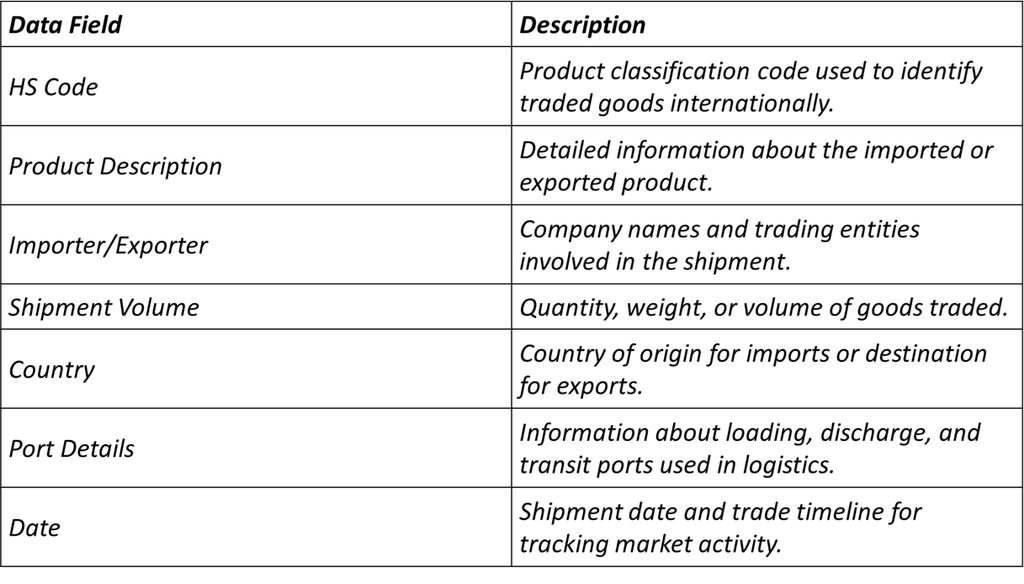
WHAT DETAILS ARE INCLUDED IN SRI LANKA CUSTOMS DATA?
THE EFFECTIVENESS OF SRI LANKA IMPORT DATA AND SRI LANKA CUSTOMS DATA IN BUSINESS GROWTH
Sri Lanka import data and Sri Lanka customs data provide the authorities with valuable intelligence into businesses looking for market expansion. The historical trade information allows companies to examine active importers, purchasing behaviours, supplier countries, and product demand. International suppliers help businesses identify the Sri Lankan authorities with regular purchases of particular products and use the intelligence to create focused sales strategies. The companies can prioritize businesses based on the demonstration of the purchasing activity. The competitor analysis supports the important application of Sri Lanka shipment data as it provides detailed visualization of the latest activities of trade.
Businesses can examine the competitor shipment activity to understand the sourcing, country, supplier relationship, and product categories. This overall helps the companies identify gaps in the market for development of differentiated products or services. Sri Lanka customs data contributes to supply chain optimization. Progressive businesses can compare supplier countries with evaluation of sourcing alternatives and understanding of the trade routes.
HOW DOES SRI LANKA IMPORT-EXPORT DATA SUPPORT BUSINESS GROWTH?
Sri Lanka import-export data is a valuable tool for the marketing authorities because it gives a proper visualization of importer name, exporter name, product description, and HS code to beginner traders. The progressive authorities can even examine competitor activities to get a proper understanding of the sourcing strategy, supplier relationships, and the product categories.
Latest trade updates on Sri Lanka customs shipment data help businesses with increasing shipment activity acknowledgement and examination of the frequency and product demand rate. Supply chain optimization also promotes companies’ evaluation of sourcing countries. Traders can compare alternative suppliers with assessment of the trade routes and improvement of the procurement strategies.
THE FUTURE TRADE OUTLOOK OF SRI LANKA IMPORT-EXPORT DATA
The future of Sri Lanka import-export data will be mainly influenced by export diversification, manufacturing development, logistic modernization, and agricultural value addition. Apparel, tea, coconut products, food and beverages will mainly contribute to the important areas of commercial activity. The value-added agricultural products and the technology-enabled services will create additional export opportunities. The growth of the coconut-based exports will demonstrate the potential of the nation for Sri Lanka, while increasing the national value of the agricultural resources. Technology and digital services also play a significant role in the overall trade outlook.
The logistics sector will further strengthen its positioning as an Indian Ocean trader and transhipment hub. The improvements in ports, transportation networks, and digital customs will create opportunities for international businesses. Sustainability and value-added manufacturing will influence future trade. The renewable energy equipment, sustainable packaging, and processed agricultural goods will be responsible for creating new areas for international trade.
CONCLUSION
Sri Lanka is an important South Asian trading economy and also a representative trader of the global marketplace. The location of the country in the Indian Ocean and the establishment of the logistic infrastructure, along with agricultural resources, will serve its capabilities. The trade environment mainly includes significant activity in apparel, tea, coconut products, rubber, spices, and beverages.
Sri Lanka import data will provide valuable information for companies looking to understand the purchasing patterns. The Sri Lanka customs data provides businesses with shipment-level intelligence, helping the authorities examine product movements with suppliers, importers, and trade routes. The country will continue to diversify the export base for proper strengthening of the logistics and manufacturing capability while providing better visibility into the market movements.
CTA
If you are looking for an expansion in your business opportunities in Sri Lanka, you have come to the right platform here. ImportGlobals helps the authorities with detailed trade intelligence that provides classified information regarding buyers, suppliers, and shipment activities to the traders. Subscribe to www.importglobals.com or drop an email at info@importglobals.com for detailed access to the Sri Lanka import data and Sri Lanka trade data to strengthen your international business growth strategies.
FAQs
Que –What are the latest imported products of Sri Lanka?
Ans –Machinery, petroleum, and energy products are the latest imported products of Sri Lanka.
Que –What are the top exported products of Sri Lanka?
Ans –Apparel and textiles, tea, and coconut are the latest exported products of Sri Lanka.
Que –How doesSri Lanka import-export data support business growth?
Ans -Sri Lanka import-export data supports business growth via proper identification of buyers, supplier analysis, analysis of market demand, and development of effective market expansion strategies.
Que –What information is available in Sri Lanka trade data?
Ans -Sri Lanka trade data covers Importer names, Exporter names, Shipment date, HS Code, Product Details, quantity, values, pricing information, origin country, importing country & port details.
Que –How frequently is Sri Lanka trade data updated?
Ans -Sri Lanka trade data is updated on a monthly basis.
Que –Where can you obtain detailed trade information on Sri Lanka trade data?
Ans –Visit www.importglobals.com or email at info@importglobals.com for detailed updates on the Sri Lanka trade data.