
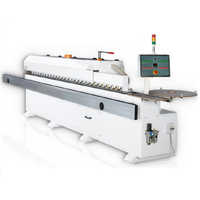
Woodworking has evolved significantly over the past few decades, blending traditional craftsmanship with advanced machinery to enhance precision, efficiency, and aesthetics. One tool that has become indispensable in contemporary woodworking is the Edge Banding Machine. This specialized equipment has transformed the way woodworkers approach finishing, providing seamless, durable, and professional results that were once labor-intensive and time-consuming.
Understanding the Edge Banding Machine
An Edge Banding Machine is a woodworking tool designed to apply a protective and decorative strip, usually made of PVC, ABS, wood veneer, or melamine, along the exposed edges of panels. These panels are typically made of plywood, particleboard, or MDF. The primary goal of edge banding is to protect the core material from moisture, wear, and tear while improving the overall visual appeal of the furniture or cabinetry.
Modern Edge Banding Machines are highly automated, capable of handling different materials, widths, and thicknesses. They can perform multiple functions, including gluing, trimming, buffing, and sometimes corner rounding, making them an essential component in furniture manufacturing and custom woodworking shops.
Benefits of Using an Edge Banding Machine
Enhanced Efficiency and Speed
One of the most significant advantages of an Edge Banding Machine is the speed it brings to woodworking projects. Applying edge banding manually is labor-intensive and requires meticulous attention to detail. With an Edge Banding Machine, operators can achieve consistent and precise results within minutes, significantly reducing production time and increasing output in commercial settings.
Superior Finish Quality
Manual edge finishing often results in inconsistencies, visible seams, or rough edges. The Edge Banding Machine ensures a uniform application of adhesive and banding material, producing clean and smooth edges. This level of consistency is vital for high-quality furniture and cabinetry, where the finish directly impacts customer satisfaction and perceived value.
Material Versatility
Edge Banding Machines are compatible with various materials, including PVC, ABS, wood veneer, and melamine. This versatility allows woodworkers to experiment with different textures, colors, and finishes, enhancing the design possibilities for custom furniture, kitchen cabinets, office workstations, and retail displays.
Reduced Waste
Manual edge banding often results in wasted materials due to errors or uneven application. An Edge Banding Machine minimizes waste by providing precise control over the amount of adhesive and banding applied. This efficiency not only reduces material costs but also supports more sustainable woodworking practices.
Safety Improvements
Handling adhesives, hot irons, or cutting tools manually carries inherent risks. Edge Banding Machines automate most of the process, reducing direct exposure to potential hazards. While proper training and safety precautions are still essential, these machines create a safer working environment for operators.
Key Features of Modern Edge Banding Machines
Automatic Feeding System
Modern Edge Banding Machines come equipped with automatic feeding systems that streamline the application process. These systems guide the panel through the machine consistently, ensuring uniform pressure and accurate alignment of the edge banding material.
Precision Trimming Units
After the adhesive and banding are applied, excess material needs trimming for a smooth finish. Precision trimming units integrated into the machine perform this task accurately, eliminating the need for manual sanding or cutting.
Hot Melt Glue Application
Most Edge Banding Machines use hot melt adhesive, which offers a strong bond and quick drying time. The glue application system ensures even distribution, preventing gaps or weak spots along the edge.
Multi-Functionality
Advanced machines often combine several processes into one workflow. They can apply glue, press the banding, trim excess material, and polish edges in a single pass. This multi-functionality significantly enhances efficiency, particularly in commercial production settings.
Applications of Edge Banding Machines in Woodworking
Furniture Manufacturing
The furniture industry heavily relies on Edge Banding Machines to create finished products with a professional appearance. Cabinets, desks, tables, and shelving units benefit from the machine’s ability to provide consistent, durable edges, ensuring that furniture not only looks great but also withstands daily use.
Kitchen and Bathroom Cabinets
Kitchen and bathroom environments are prone to moisture exposure. Using an Edge Banding Machine to apply waterproof or moisture-resistant edge banding ensures that cabinets maintain structural integrity over time, preventing swelling, cracking, or warping.
Office and Retail Interiors
Edge Banding Machines play a critical role in producing office furniture and retail displays. Precise and uniform edges enhance the visual appeal of cubicles, counters, and shelving units, creating a professional and inviting environment for employees and customers.
Custom Woodworking Projects
For hobbyists and small-scale woodworkers, an Edge Banding Machine offers the opportunity to create custom pieces with a polished, commercial-quality finish. Whether designing unique furniture, decorative panels, or specialty items, the machine enables woodworkers to achieve results that rival mass-produced products.
Tips for Maximizing the Benefits of an Edge Banding Machine
Choose the Right Machine
Selecting the appropriate Edge Banding Machine depends on the volume of work, types of materials, and desired features. Small workshops may opt for semi-automatic machines that offer essential functions, while large manufacturers benefit from fully automated machines with multiple processing units.
Regular Maintenance
Maintaining the machine is crucial for long-lasting performance. Regular cleaning, lubrication, and inspection of glue application systems and trimming units ensure consistent results and prevent downtime due to mechanical issues.
Use Quality Banding Material
The quality of edge banding material directly affects the finish and durability of the final product. Investing in high-quality PVC, ABS, or veneer strips enhances adhesion, reduces peeling, and ensures a professional look.
Proper Training
Even automated machines require skilled operators. Training staff on machine operation, safety protocols, and troubleshooting techniques helps maximize efficiency and reduces the risk of errors or accidents.
The Future of Edge Banding Machines
As technology advances, Edge Banding Machines are becoming smarter and more efficient. Integration with CNC systems, digital control panels, and sensors allows for greater precision and customization. Automation, combined with artificial intelligence, may enable machines to adjust settings in real time, optimizing glue application, banding alignment, and trimming based on the material and project specifications.
Additionally, sustainable materials and eco-friendly adhesives are gaining prominence, making Edge Banding Machines more compatible with environmentally responsible woodworking practices. These innovations will continue to shape the role of the machine in modern woodworking, providing faster, safer, and higher-quality results.
Conclusion
The Edge Banding Machine has firmly established itself as an essential tool in modern woodworking. By streamlining edge finishing, enhancing precision, and improving overall efficiency, it empowers both commercial manufacturers and hobbyist woodworkers to produce high-quality, durable, and visually appealing products. From furniture and cabinetry to custom woodworking projects, the machine’s versatility, speed, and consistency make it a cornerstone of contemporary woodworking practices. Embracing the Edge Banding Machine is not just about adopting new technology—it’s about elevating craftsmanship and ensuring that every project meets professional standards with ease and efficiency.