
Sales teams are the backbone of any organization, responsible for driving revenue, building client relationships, and maintaining a competitive edge. Traditional training methods, including in-person workshops, lectures, and online modules, have long been used to equip salespeople with necessary skills. However, these methods often struggle to deliver practical experience, engagement, and long-term retention. Enter VR training for sales teams, a modern approach that combines immersive technology with hands-on practice, redefining how employees learn and excel in real-world sales scenarios.
Understanding VR Training for Sales Teams
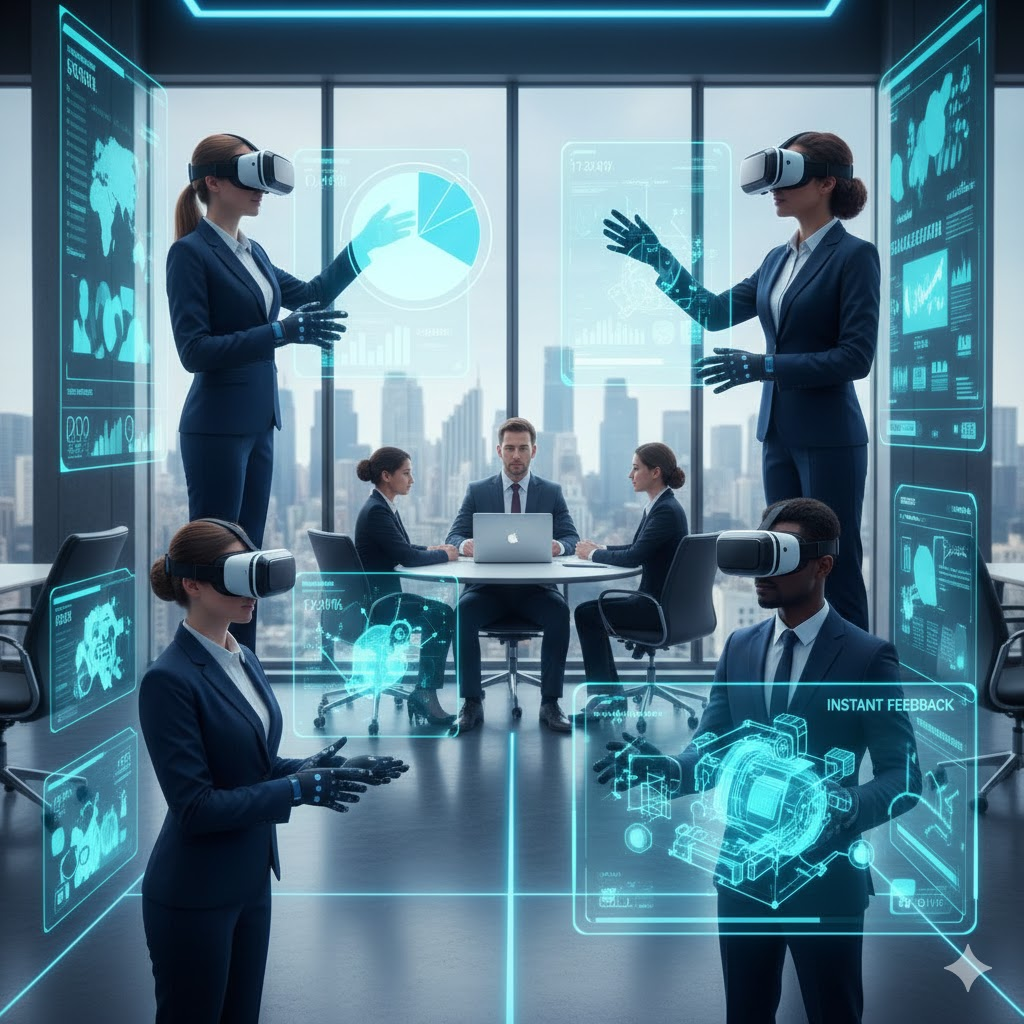
Before exploring why VR training is more effective, it’s important to understand what it entails. VR training for sales teams leverages virtual reality technology to simulate realistic customer interactions, sales presentations, and negotiation scenarios. Employees use VR headsets to enter a controlled, interactive environment where they can practice skills, receive instant feedback, and make decisions as if they were dealing with actual clients. This immersive experience bridges the gap between theoretical knowledge and practical application, offering a training approach that traditional workshops cannot replicate.
Active Learning Versus Passive Learning
One of the main limitations of traditional sales workshops is their reliance on passive learning. Employees often sit through lectures, watch demonstrations, or complete e-learning modules that provide little engagement or opportunity to practice real-world scenarios. VR training transforms this process into active learning. Sales teams interact with virtual clients, navigate complex conversations, and experiment with different techniques in real-time. This hands-on approach encourages problem-solving, decision-making, and critical thinking—skills that are directly applicable in actual sales situations.
Active participation significantly enhances retention. Studies have shown that experiential learning, where learners perform tasks rather than simply observe, improves memory retention and practical application. By simulating real client interactions, VR training ensures that sales teams internalize techniques, strategies, and communication skills far more effectively than traditional methods.
Safe Practice in Realistic Scenarios
Traditional workshops often struggle to recreate high-pressure or unpredictable sales situations safely. VR training, however, allows employees to experience challenging scenarios without the risk of losing a client or damaging relationships. Trainees can practice handling objections, resolving conflicts, and negotiating under pressure, gaining confidence and competence in a controlled environment.
This safe exposure to diverse scenarios is a major advantage of VR training. Employees can experiment with different approaches, learn from mistakes, and refine their techniques without real-world consequences. As a result, they are better prepared for actual client interactions, reducing errors and improving overall performance.
Immediate Feedback and Skill Assessment
Another reason VR training is more effective than traditional workshops is the immediate feedback it provides. Many VR systems track interactions, response times, and decision-making patterns, allowing trainees to receive real-time insights into their performance. Managers can use this data to identify strengths and weaknesses, offer targeted coaching, and ensure that each employee’s training addresses their specific development needs.
In contrast, traditional workshops often rely on delayed feedback or generalized assessments, limiting their impact on skill improvement. With VR, employees can adjust their approach instantly, reinforcing correct techniques and internalizing lessons more efficiently.
Consistency and Scalability
Traditional workshops often face logistical challenges. Scheduling instructors, arranging travel, and coordinating sessions for large teams can be costly and time-consuming. VR training for sales teams eliminates many of these barriers. Once a VR module is developed, it can be accessed by employees at any time and in any location. This ensures consistent training quality across all team members, regardless of geography or schedule constraints.
Furthermore, VR modules are repeatable. Sales teams can practice the same scenarios multiple times until mastery is achieved, something that is often impractical in conventional workshops. This scalability and consistency make VR training a highly efficient solution for organizations seeking to train large or distributed sales teams.
Enhanced Engagement and Motivation
Engagement is a key driver of learning effectiveness. Traditional workshops can struggle to maintain attention, particularly for complex topics or lengthy sessions. VR training captures learners’ focus through immersive experiences, interactive scenarios, and gamified elements. This high level of engagement not only makes learning enjoyable but also motivates employees to participate actively and continue improving their skills.
Conclusion
VR training for sales teams is revolutionizing workforce development by offering a more effective, immersive, and practical learning experience than traditional sales workshops. By combining active learning, safe practice environments, immediate feedback, and scalable solutions, VR training enhances knowledge retention, skill development, and employee confidence. Unlike conventional workshops, VR provides realistic simulations that prepare sales teams for real-world client interactions, ensuring that organizations achieve measurable improvements in performance and revenue. As businesses continue to evolve, investing in VR training represents a strategic move to equip sales teams with the skills, confidence, and adaptability required to succeed in today’s competitive marketplace.