
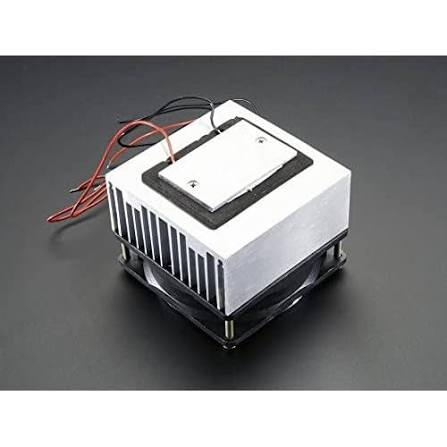
Thermoelectric technology has become an important part of modern cooling and temperature-control systems. From electronics and medical equipment to automotive Peltier Module applications and scientific instruments, thermoelectric components provide compact and reliable temperature management without traditional compressors or refrigerants. At the center of this technology is the TEC chip, a solid-state component designed to transfer heat when electrical power is applied. Understanding how a TEC chip factory produces these components helps explain why manufacturing quality plays such an important role in performance, reliability, and service life.
What Is a TEC Chip?
A TEC chip, commonly known as a thermoelectric cooler, uses the Peltier effect to move heat from one surface to another. When direct current passes through the thermoelectric material, one side becomes cold while the opposite side becomes hot. This makes the device useful for applications that require precise cooling or heating.
A typical thermoelectric component contains multiple semiconductor couples arranged between ceramic plates. These semiconductor elements are usually made from specialized thermoelectric materials selected for their electrical and thermal properties. The ceramic plates provide electrical insulation while also supporting the internal structure.
A Peltier Module is a complete thermoelectric cooling device based on this operating principle. Its effectiveness depends heavily on the quality of the materials, semiconductor elements, electrical connections, ceramic plates, and manufacturing processes used during production.
Material Selection and Preparation
Quality production begins with selecting suitable raw materials. Thermoelectric manufacturing requires semiconductor materials with carefully controlled characteristics. The composition of these materials directly influences electrical resistance, heat-transfer capability, cooling capacity, and overall efficiency.
Manufacturers carefully process and prepare the thermoelectric material before it is formed into individual semiconductor elements. Consistency is essential because even small differences in material properties can affect the performance of the finished component.
The ceramic plates also require careful selection. They need to provide good electrical insulation while maintaining sufficient thermal conductivity and mechanical strength. Depending on the intended application, manufacturers may use different ceramic materials and thicknesses to achieve the required balance between performance and durability.
Manufacturing the Semiconductor Elements
After material preparation, the semiconductor material is processed into small elements. These elements form the active portion of the TEC chip and are responsible for transferring heat when electrical current passes through them.
Precision cutting and shaping are important during this stage. Semiconductor elements must have consistent dimensions so that they can be assembled correctly. Manufacturing equipment is commonly used to maintain dimensional accuracy and reduce variations between components.
The elements are then prepared for electrical connection. Proper surface treatment and preparation help ensure strong bonding between the semiconductor materials and conductive components. Poor preparation at this stage can lead to increased electrical resistance, weak connections, or premature failure.
Creating the Thermoelectric Structure
The next stage involves arranging the semiconductor elements between conductive layers. Typically, alternating p-type and n-type semiconductor elements are connected electrically to create thermoelectric couples.
These couples are arranged in a carefully designed pattern. When electrical current flows through the structure, heat is transported in a controlled direction. The number and arrangement of couples influence important characteristics such as cooling capacity, operating voltage, current requirements, and temperature difference.
Precision is especially important during assembly because the semiconductor elements need to remain properly positioned. Automated equipment can help improve consistency, while experienced technicians may perform additional inspections throughout the process.
Ceramic Plate Assembly
Ceramic plates are placed on the two sides of the thermoelectric structure. These plates serve several important purposes. They provide electrical insulation, protect internal components, distribute mechanical pressure, and create the thermal interface between the TEC chip and the equipment being cooled or heated.
The bonding process must be carefully controlled. Excessive pressure, uneven bonding, or contamination can create weak areas within the module. Manufacturers therefore control temperature, pressure, alignment, and bonding conditions to achieve a stable structure.
A high-quality assembly should have uniform contact between the different layers. This helps reduce thermal resistance and allows heat to move efficiently through the device.
Soldering and Electrical Connections
Electrical connections are another critical part of TEC chip production. The semiconductor elements need reliable connections that can handle electrical current and repeated temperature changes.
Manufacturers use controlled soldering or bonding processes to connect the internal components. Temperature profiles must be carefully managed because excessive heat can damage thermoelectric materials or ceramic components.
The quality of these connections affects both electrical performance and reliability. A weak connection may increase resistance, create localized heating, or eventually cause an open circuit. For this reason, professional manufacturers inspect electrical connections and conduct performance tests after assembly.
Quality Control and Testing
Quality control is one of the most important stages in a TEC chip factory. Thermoelectric components must meet specific electrical, thermal, and physical requirements before they are shipped to customers.
Electrical testing can measure parameters such as resistance, voltage, and current behavior. Thermal testing evaluates cooling performance and temperature differences under controlled conditions. Manufacturers may also inspect dimensions, surface quality, bonding strength, and overall appearance.
Testing under different operating conditions can help identify components that do not meet specifications. Reliable factories maintain documented quality-control procedures so that production problems can be identified and corrected.
Thermal Performance Testing
Thermal performance is especially important because the primary purpose of a TEC chip is controlled heat transfer. During testing, manufacturers can evaluate how effectively the component moves heat from its cold side to its hot side.
Factors such as input current, voltage, ambient temperature, and heat load can influence performance. Therefore, testing should be conducted under controlled conditions to produce meaningful results.
Manufacturers may compare test results with defined specifications to ensure that each production batch performs consistently. This helps customers select thermoelectric components suitable for their specific applications.
Reliability and Durability Checks
A high-quality TEC chip must do more than perform well during initial testing. It should continue operating reliably throughout its expected service life.
Manufacturers may conduct durability tests involving temperature cycling, electrical operation, mechanical stress, and environmental exposure. These tests can reveal weaknesses in materials, solder joints, ceramic plates, or internal connections.
Reliability testing is particularly valuable for applications where component failure could affect the operation of expensive or sensitive equipment. Medical devices, laboratory instruments, optical systems, and industrial electronics often require thermoelectric components with dependable long-term performance.
Importance of Factory Manufacturing Standards
The capabilities of a TEC chip factory can significantly influence the quality of its products. A factory with modern production equipment, controlled processes, experienced technicians, and effective quality-management systems is better positioned to manufacture consistent thermoelectric components.
Production traceability is also valuable. Manufacturers can record information about materials, production batches, testing results, and inspection procedures. This makes it easier to identify potential issues and maintain consistent quality over time.
Customers should consider more than price when selecting a thermoelectric component supplier. Product specifications, manufacturing capabilities, testing procedures, customization options, and quality standards can all affect the long-term value of a component.
Applications of High-Quality TEC Chips
Quality TEC chips are used across many industries. Electronics manufacturers use them for temperature management in sensitive components. Medical and laboratory equipment may use thermoelectric cooling for precise temperature control. Optical systems can also benefit from stable temperature regulation.
Other applications include food and beverage cooling, automotive systems, telecommunications equipment, laser systems, sensors, and portable cooling devices. Because thermoelectric technology has no conventional moving compressor mechanism, it can provide compact and precise temperature control in applications where space and reliability are important.
Choosing the Right Thermoelectric Component
Selecting the right TEC chip requires understanding the requirements of the application. Important factors include cooling capacity, maximum temperature difference, operating voltage, current, dimensions, ceramic material, and expected operating conditions.
It is also important to consider the heat generated on the hot side. A thermoelectric component can move heat effectively only when the hot side is properly managed. An appropriate heat sink, thermal interface, or cooling system may therefore be required to achieve the desired performance.
The Future of TEC Chip Manufacturing
As demand for compact and efficient temperature-control technology continues to grow, thermoelectric manufacturing is expected to become increasingly sophisticated. Advances in semiconductor materials, manufacturing automation, thermal design, and quality testing can help improve the efficiency and reliability of future components.
Manufacturers are also exploring ways to optimize thermoelectric designs for specialized applications. Better production accuracy and improved material technologies can enable smaller, more efficient, and more application-specific thermoelectric devices.
Conclusion
A TEC chip factory plays a vital role in transforming specialized thermoelectric materials into reliable temperature-control components. From material preparation and semiconductor manufacturing to ceramic assembly, electrical connections, testing, and reliability inspections, every production stage can influence the final performance of the device.
A well-manufactured Peltier Module or TEC chip can provide precise, compact, and dependable thermal management for a wide range of applications. By focusing on material quality, manufacturing precision, testing, and consistent quality control, thermoelectric manufacturers can produce components capable of meeting the demanding requirements of modern cooling and heating systems.